You're welcome here, however long it has been.
A good many of the people who come to us hadn't seen a dentist in years. Some in ten or more. They usually tell us at the door, before they've got their coat off, and we say what we'd say to you: we're glad you came.
We won't ask how long it has been. We won't tut, and we won't give you a talk about brushing. Whatever state your teeth are in, we have seen it before, and we'll only discuss it when you want to.
This page tells you exactly what your first visit is like, so there is nothing to brace for. Read it slowly. Ring or book when you're ready, or don't yet. The door stays open.
Have a look round the house first, if you'd like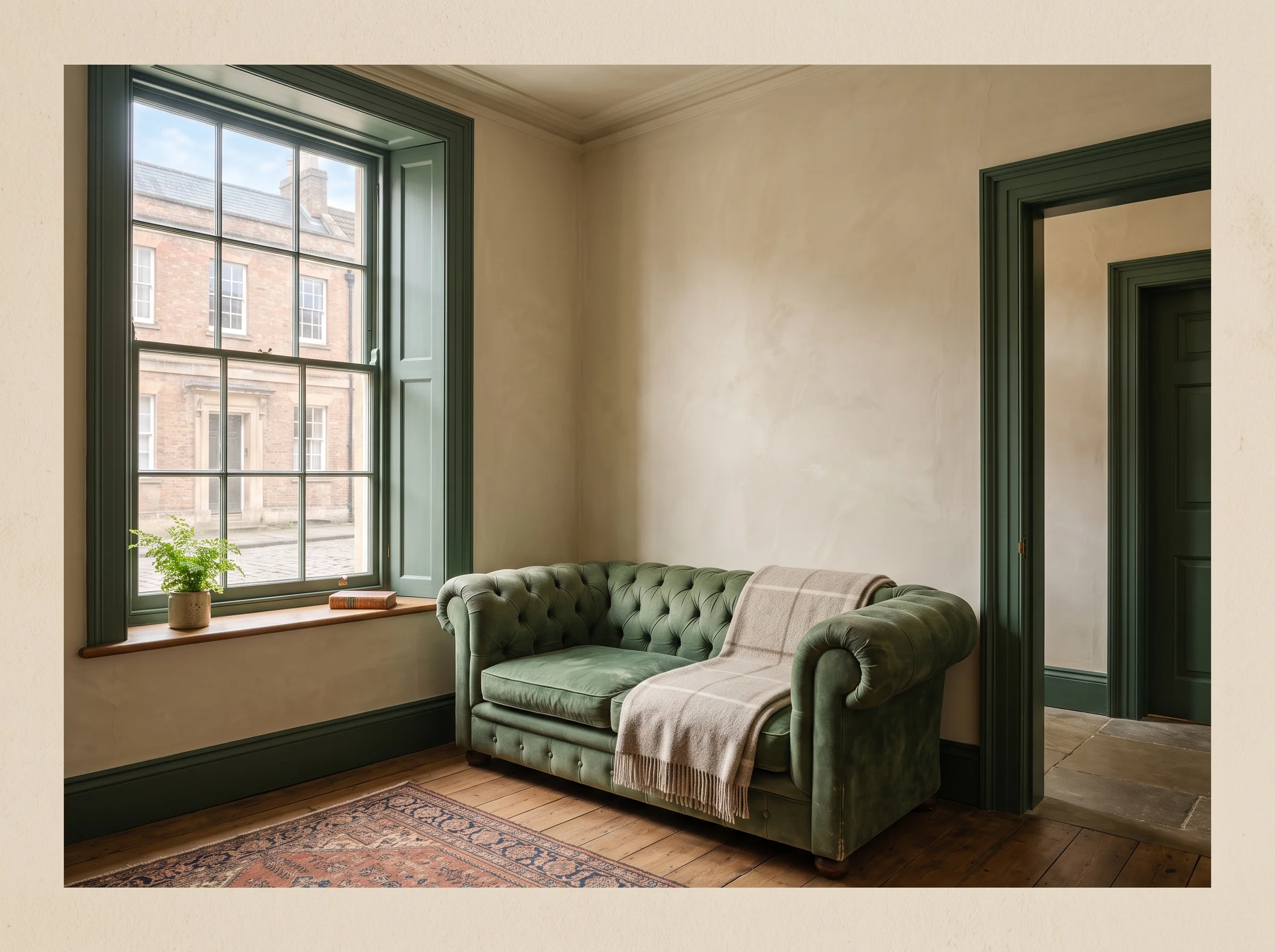
Your first visit, step by step.
A new patient appointment is forty minutes. This is how it goes, in order, with nothing left out.
-
You arrive and sit down.
One of the nurses meets you at the door and takes you through to the front room. There's tea if you'd like it. If you want to tell us you're nervous, that's useful for us to know; if you'd rather say nothing, that's fine too. We'll have guessed, and nobody minds.
-
We talk before anything else.
Anna or Sam comes down to fetch you and you go upstairs together. You can sit in the chair, upright, or in the ordinary armchair by the window if you'd rather. Then we talk: what has worried you, what you'd like to happen, and anything you'd like us never to do. Nothing is in our hands while we're talking.
-
A gentle look, if and when you're ready.
If you'd like us to, we have a look. Just a look, with a small mirror, and we tell you what we're seeing in plain words as we go. Raise a hand and we stop. If you'd rather leave the look for another day, we leave it, and the visit was still worth having.
-
You go home with nothing done that you didn't agree to.
Before you leave we tell you what we found and what, if anything, we'd suggest, with the cost written down. Then it's yours to think about at home, for as long as you like. Nothing is booked and nothing is started until you say so.
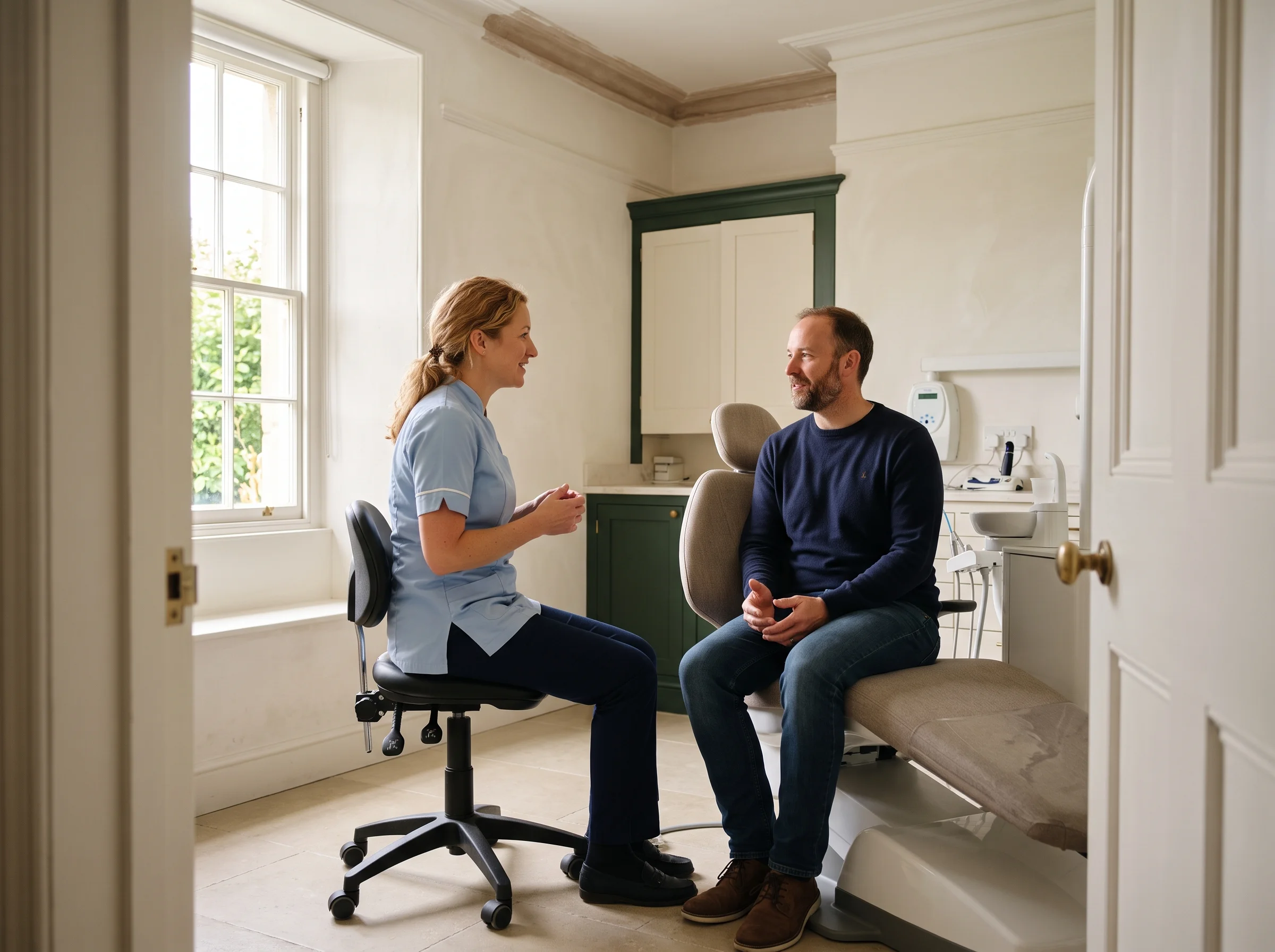
Nothing happens until you say so.
These are our rules. We keep them with everyone, on every visit, whether or not you've told us you're nervous.
- We tell you what we're going to do before we do it.
- You raise a hand, and we stop.
- You can take a break whenever you like, for as long as you like.
- You decide the pace, and the order, of anything that's done.
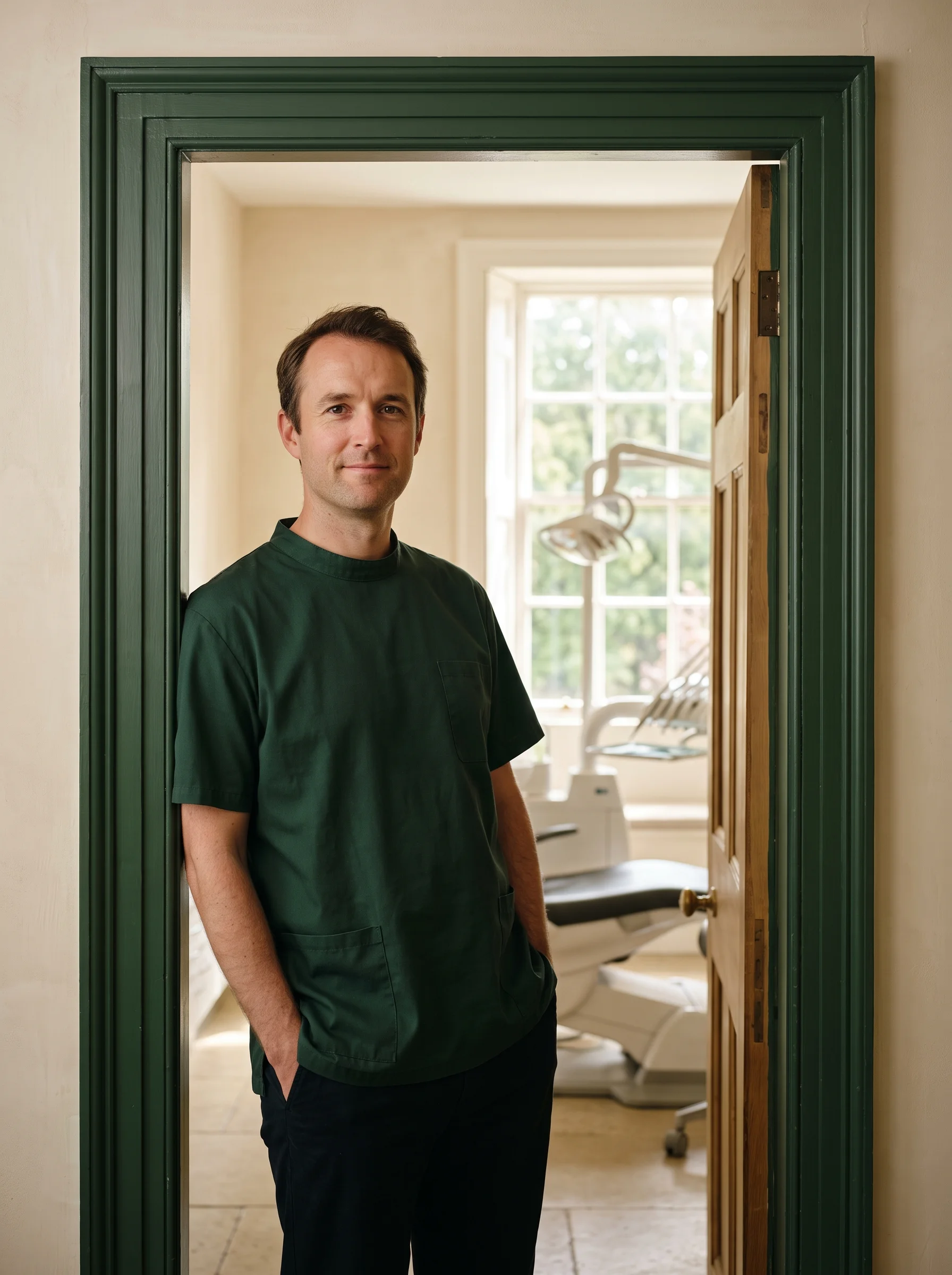
How Anna and Sam work with nervous patients.
Being gentle with frightened people is what this practice is best known for. Mostly it comes down to going slowly, and to saying out loud what is about to happen.
Anna sees most of our nervous patients. She talks you through each step as it happens, in the words you'd use yourself, and she would rather run over time than hurry you. Sam does the same, and if there is mending to do he'll offer to spread it across several short visits so that no single one is too much.
Leah, our hygienist, works the same way. She'll show you anything before it goes near you, and a first visit with her can be nothing more than a conversation about how to make brushing easier at home.
Meet Anna, Sam and Leah in their own roomsWhen you're ready.
Ring us, or book a first appointment, whenever it feels possible. Say you're nervous when you ring and whoever answers will write it down, so you never have to explain yourself twice.
If you'd like to come and simply talk, with no look at all, say that too. It's a perfectly ordinary first visit here.
A first appointment is forty minutes and costs £65. Every fee is written down on the fees page, so there are no surprises there either.